


Message from President
GREETINGS
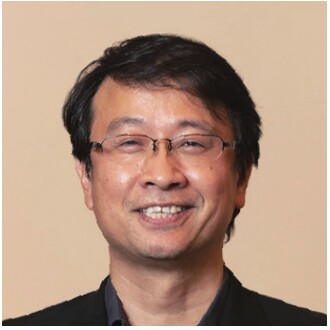
President Eiji HATO
My first duty as President of the Alumni Association was to join the Hokuriku Branch for an event and walk through the city of Kanazawa. What struck me there was not only the charm of Kanazawa itself, but also the immense contributions of our alumni, who support and preserve the city, and continue to bring it to life in a way that is appropriate for the modern age. As President, I have never had a more heartening or joyful experience.
During this tour, we traced the connections between Kanazawa's culture and urban landscape, visiting sites such as Kenroku-en Garden, Kanazawa Castle, the Samurai District, Oyama Shrine, the library and the Kanazawa College of Art. We also explored the Tatsumi Irrigation Canal, which is drawn from the Sai River, passes alongside the Kanazawa College of Art, is purified in a sedimentation basin, and then flows into the meandering stream of Kenroku-en Garden. Thanks to an explanation from Mr. Yasuhiro Kimura, Director of Ishikawa Prefecture, it became clear that Kenroku-en does not exist as an isolated garden; rather, through the Tatsumi Irrigation Canal—which the prefecture continues to manage with great care—and the streets, it forms a continuum with the castle, the samurai quarter, temples and shrines, and cultural facilities dating from the modern era onwards, thereby shaping the cultural framework of the city of Kanazawa as a whole.
What struck me was that these elements are not merely objects of "preservation", but are treated as a living foundation within contemporary urban life. The cultural heritage accumulated since the days of the Maeda clan has not only been preserved in the form of gardens, waterways, castles and samurai districts, but has also been reinterpreted since the Meiji period as Oyama Shrine and modern architecture, and has been passed down whilst changing its purpose to universities and public cultural facilities in the post-war era. The process by which the castle—once a seat of power—transformed into military grounds, a university and, subsequently, a public cultural space also strikes me as a journey characteristic of Kanazawa, a city that has continually re-appropriated its urban assets in line with the times.
And it is the alumni of the University of Tokyo's Department of Civil Engineering and Social Infrastructure—who are active in their respective fields, including local government, railways, roads, architecture and urban planning—who underpin these endeavours today. Their work spans a wide range of areas, from the maintenance of the Tatsumi Irrigation Canal and the preservation of historical records, to the renewal of roads and facilities, the development of cultural venues and the reorganisation of urban spaces. Underlying all this was an approach that sought not merely to preserve the value of this historic city, but to re-embed it within contemporary urban functions and pass it on to the next generation. Alumni working in local government, academia, JR West, NEXCO Central Japan, design, planning and education gathered in response to the call from the Hokuriku Branch Chair. Witnessing them all engaged with the city of Kanazawa from their respective positions, I was deeply impressed by the depth and practical expertise of our department's graduates.
In today's chaotic society, I believe that the value of a city is not something that is fixed and unchanging from the outset; rather, even amidst turbulent times, it is preserved through the efforts of individuals who intervene, make the most of what is available, and reconnect the various elements. In regional areas facing population decline, pessimistic discussions are all too common. What I witnessed in Kanazawa on this occasion was the work of our alumni, who are creating new value by carefully interpreting the city's remaining assets and revitalising them within contemporary life. It is a source of great pride that so many of our alumni are actively involved in the reconstruction of Noto and the urban development of the Hokuriku region. This visit to the Hokuriku Branch reaffirmed our desire, as the Alumni Association, to play a role in connecting and supporting these local initiatives and passing them on to the next generation.
30 June 2026